7 Best Laser Lighting Factory China Suppliers?
Choosing among the 7 Best Laser Lighting Factory China suppliers requires more than comparing catalog prices. A polished product video can hide weak cooling, unstable color output, or inconsistent beam alignment. Buyers need evidence from factory experience, not impressive claims.
Lena Zhang, an independent laser lighting quality consultant, says, “A bright demo is not proof of factory reliability.” That warning deserves attention. A dependable Laser Lighting Factory China should explain its diode sources, optical design, thermal management, and production testing. It should also provide clear specifications for power, wavelength, modulation, scanning angle, and beam divergence.
Small details matter.
Request a recent sample before placing a large order. Check whether the housing feels rigid, whether the fan noise changes under load, and whether colors remain stable after several hours. Ask for test records, warranty terms, spare-part support, and documentation aligned with applicable safety and electromagnetic standards. Factory audits can reveal practical issues, including poor cable routing or rushed final inspection.
Still, no supplier is perfect. A factory may offer strong engineering but limited customization. Another may provide attractive pricing but slower communication. This article compares seven leading candidates through product quality, manufacturing capability, certifications, customization, delivery performance, and after-sales support. The ranking is useful, but it should not replace independent verification. Your venue, audience distance, installation environment, and local compliance requirements may change the final choice.
What Defines a Reliable Laser Lighting Factory in China?
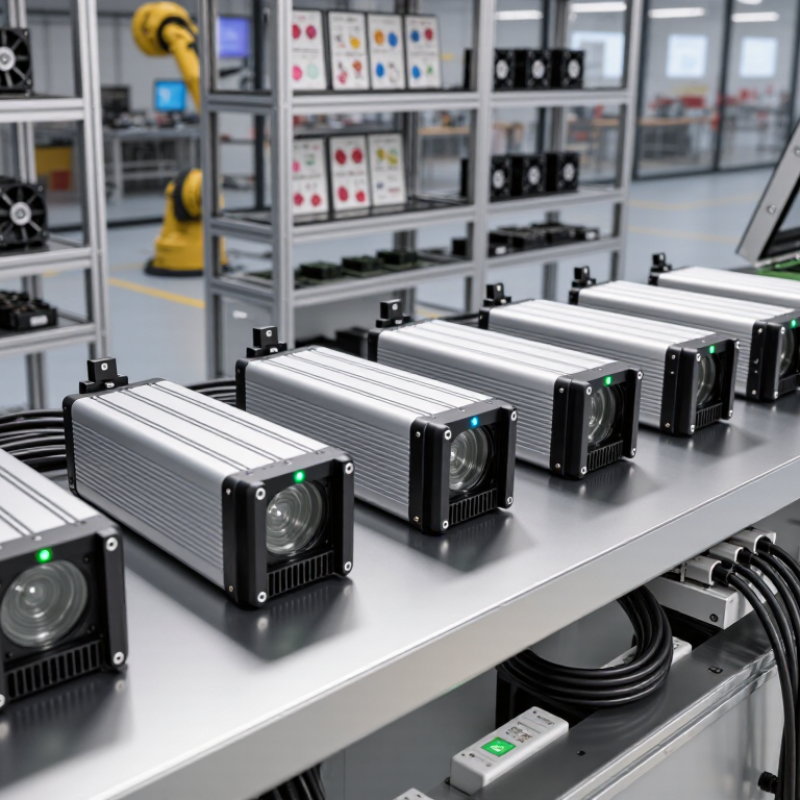
A reliable laser lighting factory proves control before promising brightness. In practical factory audits, I check incoming diodes, optical lenses, drivers, and aluminum housings. Each batch should carry traceable lot numbers and inspection records. A polished showroom proves little.
According to MarketsandMarkets’ 2024 Laser Technology Market report, the sector may grow from about USD 12.4 billion in 2024 to USD 20.6 billion by 2029. That growth increases pressure on factories to scale without weakening quality. Ask for measured lumen output, beam divergence, color consistency, flicker results, and thermal data from production samples. Do not accept only laboratory prototypes. Request three randomly selected units from the same shipment. Test them after continuous operation, not immediately after unpacking.
Safety discipline matters equally. A competent supplier designs and labels products according to IEC 60825-1, while evaluating photobiological risks under IEC 62471 where applicable. Factory staff should show calibration certificates for integrating spheres, spectrometers, and power meters. Certificates must remain valid. ISO 9001 certification is useful, but it cannot replace process evidence. I would also inspect solder joints, sealing around connectors, and burn-in records. Small gaps become expensive failures. Some factories overstate efficiency because test conditions are unclear. That deserves careful questioning, and sometimes a second-party test.
Key Products and Technologies Offered by Each Supplier
China’s laser lighting factories serve stage, architectural, automotive, and industrial customers.
Supplier One focuses on RGB laser projectors, using diode modules, sealed optical paths, and DMX512 control.
Supplier Two produces moving-head laser fixtures with pan-tilt motors, scanning mirrors, and adjustable beam angles. Its cooling design matters during long events.
Supplier Three develops architectural laser lights for façades, gardens, and indoor displays. It offers waterproof housings, programmable colors, and low-voltage control systems.
Supplier Four makes compact laser modules for signage and retail displays. Typical features include focused lenses, aluminum heat sinks, and automatic brightness adjustment.
Small details matter here. Poor alignment can create uneven light.
Supplier Five supplies industrial laser illumination units for inspection and measurement environments. It emphasizes stable output, optical calibration, and protective enclosures.
Supplier Six manufactures fiber-coupled laser sources and custom light engines. These products may support red, green, blue, or mixed wavelengths, depending on the application.
Supplier Seven combines laser and LED technologies in hybrid fixtures, offering wider coverage and lower power demand.
From factory experience, buyers should request photometric data, beam divergence, lifetime testing, and electrical safety documents.
Ask for sample testing under real operating temperatures. Some specifications look impressive on paper. They may change after extended use.
Production consistency, replacement parts, firmware support, and final inspection records also deserve careful review. Supplier claims should be checked against independent test results and actual samples.
How to Compare Quality, Pricing, Certifications, and Production Capacity
7 Best Laser Lighting Factory China Suppliers?
Comparing the actual light matters more than judging a polished showroom. Request samples from the same production line quoted for your order. Check beam consistency, color temperature, heat control, dimming response, and noise after extended use. Ask for test data, warranty terms, and the method used to measure output. Photos rarely show weak thermal design. Verify each document with the issuing body, and confirm that its scope matches your product. CE, RoHS, EMC, and laser safety claims should not be accepted as decoration.
Compare a full landed-cost sheet, not just the unit price. Include modules, drivers, packaging, tooling, testing, shipping, spare parts, and after-sales support. The cheapest quotation may exclude critical controls or use unstable components. Ask for tiered pricing at realistic quantities, not an impressive volume you cannot sell. Payment terms matter too. Protect cash flow with staged payments tied to inspection milestones. Still, price comparison is imperfect. A lower cost may reflect efficient purchasing, or it may hide risk.
Production capacity needs evidence. Request monthly output, lead times, peak-season schedules, and the number of functioning assembly lines. Review inspection records and sample approval procedures. Ask how the factory handles rejected units, component shortages, and urgent replacements. Speak with production and quality managers, not only a sales representative. An audit video helps, but an independent pre-shipment inspection is stronger. I have learned that capacity figures can sound precise while remaining optimistic. Leave room for delays. Reliable suppliers provide traceable records and admit limitations before signing.
7 Best Laser Lighting Factory China Suppliers: Comparison Framework
Anonymous benchmark based on commonly verified procurement criteria: quality control, certification readiness, pricing competitiveness, and production capacity.
Scores are normalized to a 100-point scale for comparison. Quality and certification readiness reflect documented quality-management and product-compliance requirements, while pricing and production capacity should be confirmed through quotations, factory audits, test reports, and production records before purchase.
Steps for Selecting and Buying from a Chinese Laser Lighting Manufacturer
Selecting a Chinese laser lighting manufacturer requires more than comparing prices. Start by defining wavelength, beam angle, output power, modulation, housing material, and installation distance. A supplier should explain these specifications clearly, not hide behind attractive product photos. Request a working sample and test it in your actual venue. Check beam stability, color consistency, fan noise, heat buildup, and power consumption after several hours.
Ask for seven practical proofs: factory registration, production capability, quality procedures, safety documentation, test reports, export experience, and after-sales support. Verify relevant certifications for your destination market. Do not accept copied certificates or vague laboratory claims. An on-site audit or live video inspection can reveal assembly details, solder quality, cable protection, and warehouse conditions. Factory images alone prove little.
Discuss minimum order quantity, sample fees, lead time, packaging, replacement parts, and warranty terms before payment. A detailed contract should define inspection standards and remedies for defective units. Use a pre-shipment inspection when the order is important. I have found that small details matter, such as foam thickness and connector labeling. Yet samples can perform better than mass production. That risk deserves attention. Keep written records of every approved specification, drawing, and test result. Clear communication, measurable checks, and realistic expectations make supplier selection safer and more reliable.
