
7 Best Blue Light Therapy Devices for Global Buyers?

Choosing the right device requires more than trusting a bright product photo. This guide examines seven Blue Light Therapy devices for buyers across different countries and shopping environments.

Blue Light Therapy is commonly discussed for blemish-prone skin and related cosmetic concerns. Results can differ widely. Skin type, treatment consistency, wavelength, and device power all influence practical outcomes. A blue glow alone proves very little. Clinical relevance depends on measured specifications, realistic instructions, and responsible use.

Details matter.

We compare wavelength information, irradiance claims, treatment areas, session length, comfort, and price. We also review safety guidance, eye protection, charging systems, warranties, and international availability. Some products provide laboratory measurements. Others offer vague technical language. That gap matters.

A dermatologist or qualified healthcare professional can help assess whether light treatment suits individual skin needs. People using photosensitizing medicines should seek professional advice before purchasing. Sensitive skin may also react differently than expected. No device is perfect, and no ranking can predict every user’s experience.

This review follows manufacturer information, available clinical evidence, and practical buyer considerations. Certification and electrical standards may vary between regions, so local requirements deserve attention. Features can look impressive while remaining difficult to verify. That is worth questioning.

The goal is not to promise flawless skin. It is to make comparison clearer, safer, and more realistic. Readers can identify useful specifications, recognize marketing gaps, and choose more carefully. For global buyers, a reliable warranty and accessible support may matter as much as light output.
7 Best Blue Light Therapy Devices for Global Buyers?

What Is Blue Light Therapy and How Does It Work?

Blue light therapy uses specific wavelengths, commonly around 405–470 nanometres, to affect the skin’s surface. For acne-prone skin, blue light can activate compounds produced by certain bacteria. This may reduce bacterial activity and calm some breakouts. It does not scrub pores or remove every cause of acne. Hormones, oil production, stress, and skincare habits still matter.

The process is usually gentle and non-invasive. A device shines blue light on clean, dry skin for a set period. Results often require repeated sessions over several weeks. However, research quality varies, and outcomes are not perfectly predictable. Some users notice fewer inflamed spots, while others see limited change. The explanation is less magical than many advertisements suggest. Eye protection and correct exposure time remain important.

Tips: Check the wavelength, treatment schedule, warranty, and electrical standards before buying internationally. Follow the manufacturer’s distance and session instructions carefully. Avoid using a device over irritated or injured skin. Ask a qualified dermatologist before treatment if you take light-sensitive medication or have an eye condition. Take weekly photos in the same lighting. It makes small changes easier to judge. Stop if you experience persistent redness, pain, unusual swelling, or vision changes. A device can support a routine, but it should not replace professional acne care when symptoms are severe or scarring develops.

Which Conditions Can Blue Light Therapy Devices Address?

Blue light therapy devices are most commonly used for mild to moderate acne. Blue wavelengths can target acne-related bacteria on the skin’s surface. Some users notice fewer inflamed spots after several weeks. Improvement is gradual, not instant. Results may differ with hormonal acne, deeper cysts, or inconsistent treatment. Dermatologists may recommend blue light alongside gentle cleansing and approved acne medicines. Home devices usually provide lower energy than clinical equipment, so their effects may be less predictable.

Research also explores blue light for certain inflammatory skin concerns, but evidence remains uneven. It should not replace assessment for unexplained rashes, persistent redness, or painful lesions. Blue light is not the same as bright-light therapy used for seasonal mood changes. Using the wrong device may waste time or irritate sensitive skin. That distinction matters.

Tips: Follow the device’s treatment schedule and protect your eyes as directed. Clean the treatment surface before each session. Avoid combining therapy with photosensitizing medicines unless a qualified clinician approves it. Stop if you develop burning, swelling, or lasting discomfort. Take weekly photos in similar lighting. This makes small changes easier to judge. Results vary. Be patient, but stay critical.

How to Compare the Seven Best Devices for Global Buyers

A serious comparison starts with specifications, not glossy photographs. For the seven leading devices, record the blue-light wavelength, irradiance, treatment distance, timer, and treatment area. Published studies commonly examine blue light near 405–420 nanometres, but home-device results may differ. That difference matters. A stronger output is not automatically safer or more effective. Look for clear testing methods, realistic treatment schedules, and evidence that matches the device’s intended use.

Global buyers should compare electrical compatibility as carefully as light performance. Check voltage, plug type, charging options, language support, warranty coverage, and return procedures. A device designed for one market may require an unsuitable adapter elsewhere. Also inspect eye protection, heat management, skin-contact materials, and cleaning instructions. Regulatory markings can support trust, but they do not replace independent safety evidence or professional advice.

Use a simple comparison sheet and score each device against the same criteria. Give extra weight to transparent measurements and published clinical references. User reviews can reveal practical issues, such as a loose strap or a timer that resets unexpectedly. They are useful, but not definitive. My own comparison would remain imperfect because home-use data is limited and product specifications are not always reported consistently. People taking photosensitising medication or managing a light-sensitive condition should seek qualified medical guidance before treatment.

7 Best Blue Light Therapy Devices for Global Buyers

How to Compare the Seven Best Devices for Global Buyers

This comparison focuses on practical specifications that matter to international buyers: treatment coverage, blue-light wavelength, session duration, and battery runtime. Larger treatment coverage may improve convenience, while a wavelength near 415 nm is commonly associated with blue-light acne applications. Buyers should confirm regional electrical compatibility, safety documentation, warranty coverage, and replacement-part availability before purchasing.

What Features and Safety Standards Should Buyers Check?

7 Best Blue Light Therapy Devices for Global Buyers

What Features and Safety Standards Should Buyers Check?

Choosing a blue light therapy device requires more than comparing brightness or price. Check the stated wavelength, irradiance, treatment distance, and session duration. Reliable products provide these figures clearly, not vague promises. A built-in timer can reduce accidental overuse. Adjustable intensity is useful for sensitive skin or first-time users.

Safety evidence matters. Look for photobiological safety testing under IEC 62471, where applicable. Electrical products may also reference IEC 60601-1, depending on their intended use and classification. Regional marks, such as CE or UKCA, can support market compliance, but they do not prove clinical effectiveness. Ask whether test reports are traceable and issued by a qualified laboratory. Eye protection should be included when the light may reach the eyes. Never assume “low heat” means harmless.

Tips: Read the full manual before use. Check warnings about photosensitising medicines, eye conditions, and skin disorders. Keep a simple treatment log with dates, distance, and reactions. Stop if burning, persistent redness, or visual discomfort appears. Consult a qualified healthcare professional when risks are unclear.

In practice, transparent instructions often reveal more than polished packaging. I would question any device promising instant results. Evidence can be limited, and individual responses vary. A sensible buyer compares measurable specifications, independent testing, warranty support, and local electrical requirements before purchasing.

7 Best Blue Light Therapy Devices for Global Buyers? - What Features and Safety Standards Should Buyers Check?

Device Type Typical Blue-Light Range Best Use Case Key Features to Check Main Advantages Limitations Safety and Compliance Checks
Handheld Acne Wand Approximately 405–470 nm Small, localized areas of acne-prone skin Contact or distance sensor, treatment timer, replaceable protective lens, clear irradiance information Portable, targeted, and usually simple to operate Slow coverage of large areas; treatment consistency depends on user technique Photobiological risk assessment to IEC 62471; electrical safety documentation; eye-protection instructions; skin-contact material assessment where applicable
Flexible LED Face Mask Approximately 405–470 nm, sometimes combined with red or near-infrared LEDs Hands-free facial treatment Even LED spacing, adjustable straps, controlled treatment time, ventilation, comfortable eye shields, low heat Convenient and covers a broad facial area Fit varies by face shape; direct light exposure near the eyes requires careful design IEC 62471 testing; IEC 60601-1 if positioned as medical electrical equipment; EMC testing under IEC 60601-1-2 where applicable; documented eye-safety instructions
Rigid LED Face Shield Approximately 405–470 nm Repeatable full-face positioning at home Stable working distance, uniform irradiance, built-in eye shielding, rechargeable or mains power options Consistent positioning and generally easier cleaning than fabric masks Less adaptable to different face sizes; may be heavier or less portable IEC 62471 risk group information; electrical and battery safety tests; charger compliance for the destination market; clear contraindication and eye-protection guidance
Small Desktop LED Panel Approximately 405–470 nm; some models add red wavelengths Face, neck, or other small treatment zones Adjustable stand, measured irradiance at stated distances, cooling system, countdown timer, wavelength disclosure Larger coverage and flexible positioning Requires a dedicated space; incorrect distance can change delivered dose IEC 62471 assessment; IEC 60601-1 and IEC 60601-1-2 where applicable; thermal and electrical protection; instructions must specify distance and session duration
Full-Body LED Panel Often includes blue light near 405–470 nm, frequently combined with other wavelengths Large-area or professional-style use Independent wavelength controls, stable mounting, cooling, power protection, verified irradiance uniformity, emergency shut-off Efficient coverage of large areas Higher cost, larger footprint, and greater need for dose and eye-safety control IEC 62471; electrical safety and EMC reports; overheating protection; documented exposure limits; check destination-country rules for professional or medical claims
Acne Treatment Panel with Contact Surface Approximately 405–470 nm Targeted treatment of facial or body blemishes Smooth cleanable surface, skin-contact sensor, session control, low-temperature operation, replaceable covers if supplied Close positioning can improve treatment repeatability Requires cleaning between users; unsuitable for broken or infected skin unless professionally advised IEC 62471; biocompatibility or skin-contact evaluation under ISO 10993 when relevant; cleaning and disinfection instructions; electrical safety documentation
Clinic-Style Multi-Mode LED System Blue mode commonly near 405–470 nm; may include red or near-infrared modes Clinics, salons, or experienced users requiring multiple treatment settings Independent mode controls, treatment logs, calibrated output, protective eyewear, service documentation, fault alerts Greater control and broader operating flexibility More complex operation; professional training may be necessary IEC 62471; IEC 60601-1 and IEC 60601-1-2 where applicable; calibration records; local medical-device registration or authorization; documented user training and risk controls
Buyer checklist: Confirm the exact wavelength, irradiance, treatment distance, exposure time, eye-protection requirements, thermal controls, warranty, electrical plug and voltage compatibility, and the regulatory status required in the destination market. “CE marked,” “FDA registered,” or “clinically tested” should be verified through supporting documentation rather than treated as automatic proof of effectiveness or safety.
Important: Blue-light devices are not suitable for every skin or eye condition. Buyers should follow the manufacturer’s instructions and seek professional advice when using photosensitizing medicines, managing eye disease, or treating persistent or severe acne.

How to Choose, Use, and Maintain the Right Device

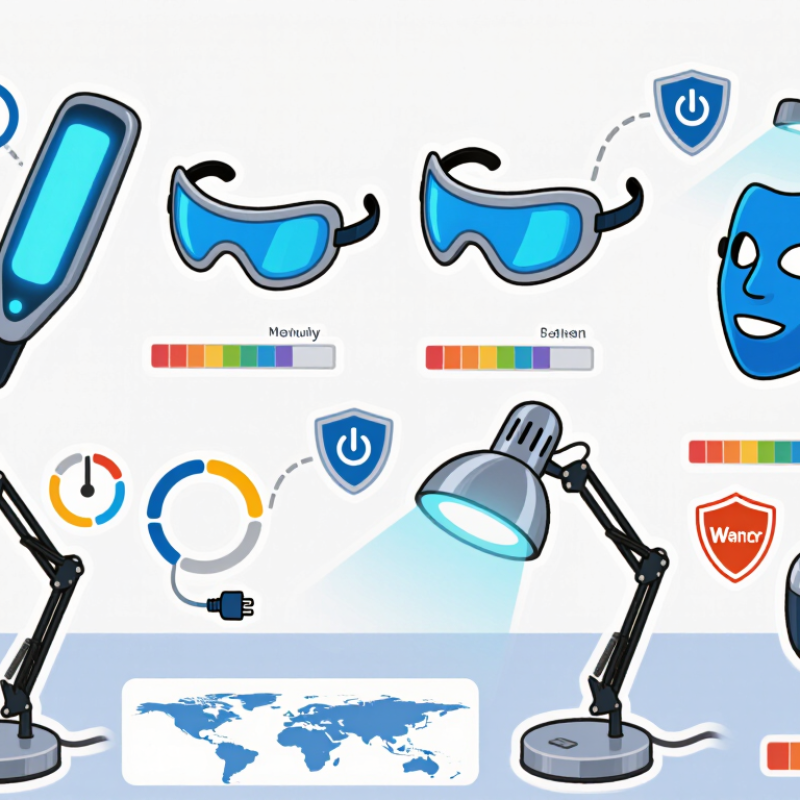
Choosing among the seven best blue light therapy devices starts with your skin goal, not the product’s appearance. Wands offer targeted treatment, while masks cover larger areas. Panels suit flexible routines but need careful positioning. Check the wavelength range, treatment distance, session length, and published safety data. A clear manual matters. So does independent testing.

Global buyers should confirm plug type, voltage compatibility, warranty coverage, and return policies before ordering. Look for transparent instructions and relevant regulatory documentation. Do not assume a higher light intensity means better results. Follow the stated schedule, protect your eyes when required, and stop if you notice pain, unusual redness, or vision changes. People using photosensitizing medicines should ask a qualified healthcare professional first. Evidence can vary, and marketing claims are often stronger than research.

Tips Clean the treatment surface with a soft, dry cloth. Keep the device away from bathrooms and direct sunlight. Store cables without sharp bends. Record each session, including duration and skin response. This simple log can reveal irritation that memory misses. No routine is perfect. Some users increase sessions too quickly, then mistake irritation for progress. Review the instructions every few weeks, because small maintenance habits affect comfort, consistency, and device life.

dLED: retail LED lighting
Privacy Overview

This website uses cookies so that we can provide you with the best user experience possible. Cookie information is stored in your browser and performs functions such as recognising you when you return to our website and helping our team to understand which sections of the website you find most interesting and useful.