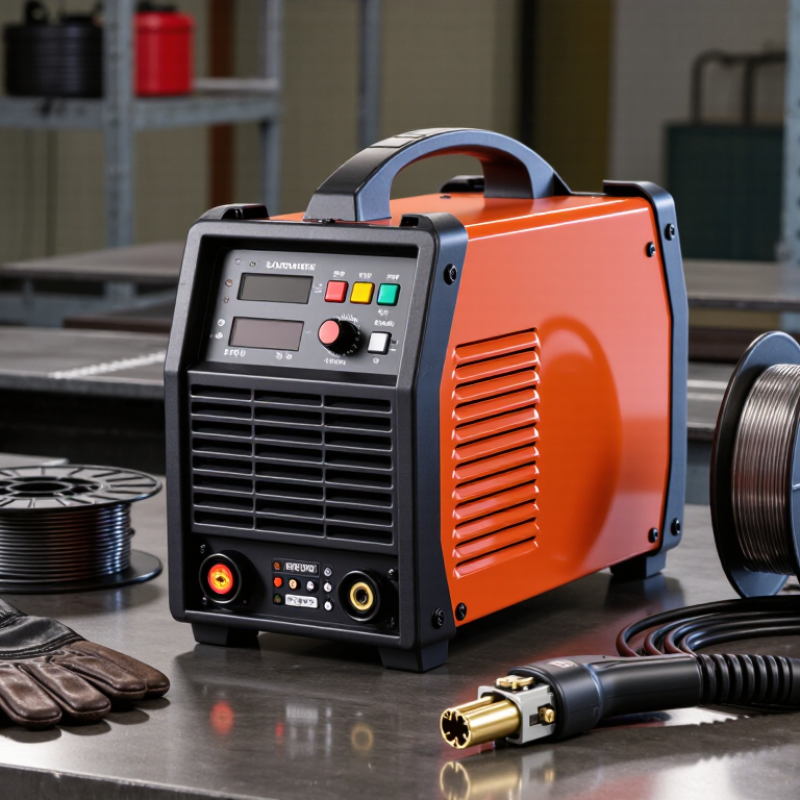
Best China Flux Core Welder for Global Buyers?

Choosing the best China Flux Core Welder for global buyers requires more than comparing prices and catalog photographs. A reliable Flux Core Welder must perform steadily in workshops, construction areas, repair stations, and outdoor maintenance tasks. Buyers should examine welding current, duty cycle, wire diameter range, input voltage, portability, and thermal protection. A machine rated for 200 amps may not deliver that output continuously. Details matter.

Experienced importers also inspect factory capabilities, quality control records, production testing, and after-sales support. Ask for real welding videos, load-test reports, component details, and clear product specifications. Claims need proof. A dependable manufacturer should explain whether the unit supports self-shielded flux-cored wire, gas-shielded operation, or both. The torch, ground clamp, cooling fan, and wire-feeding system deserve close attention because small weaknesses become expensive during daily use. Packaging quality matters too, especially when equipment crosses long shipping routes.

Global buyers must also confirm electrical compatibility, plug requirements, labeling, manuals, and applicable safety certifications for the destination market. Requirements differ between regions, so local verification remains essential. Supplier experience with export documentation can reduce avoidable delays. However, no factory is perfect, and a polished website cannot replace independent inspection or sample testing. A practical evaluation should compare arc stability, spatter, wire feeding, restart performance, and weld appearance on actual steel pieces. A low purchase price can lose its advantage when spare parts arrive slowly or technical support becomes unclear. This guide examines key buying criteria, supplier reliability, performance evidence, and common selection mistakes before recommending a suitable China Flux Core Welder for international applications.

Best China Flux Core Welder for Global Buyers?

What Is a Flux Core Welder and Why Consider Chinese Manufacturers?

A flux core welder feeds a continuously wound wire through a welding gun. Its flux creates shielding gas and forms slag over the bead. Some wires still require external gas, while self-shielded wire suits outdoor repairs and windy construction sites. The process is forgiving on rusty steel, but it produces smoke, sparks, and visible slag. Ventilation and suitable protective equipment remain essential.

Demand supports serious consideration of Chinese manufacturers. Grand View Research estimated the global welding equipment market at about USD 15 billion in 2023, with steady growth expected through 2030. Market boundaries differ, so I would not treat every forecast as a promise. Still, the scale shows why buyers compare suppliers across Asia, Europe, and North America. Chinese factories often offer flexible input voltages, compact inverter designs, and customized packaging. Those features matter when a machine travels between workshops, farms, and remote job sites.

Price alone is a weak test. Request duty-cycle data at the actual output current, not only the maximum amperage. Ask for test welds on similar steel thicknesses, independent electrical-safety documentation, and spare-part availability. Check whether the machine follows relevant IEC 60974-1 requirements. A cheap unit can become expensive when its torch connector, fan, or control board is difficult to replace. The uncomfortable point is simple: supplier claims may look polished, while real bead consistency remains uncertain. Record a sample weld, inspect penetration, and question anything that cannot be measured.

Best China Flux Core Welder for Global Buyers?

Typical FCAW operating-current windows by wire diameter. This benchmark helps global buyers compare a welder’s output capacity, duty cycle, and suitability for common fabrication work when evaluating Chinese manufacturers.

Reference basis: typical FCAW procedure ranges used in industry practice. Actual settings vary by wire classification, base-metal thickness, welding position, shielding gas, and manufacturer recommendations. Higher current capacity alone does not guarantee better weld quality; duty cycle, voltage control, wire-feed stability, safety certification, and spare-parts support should also be checked.

Which Specifications Define the Best Flux Core Welder?

When comparing a China-made flux core welder, specifications matter more than polished product photos. In workshop testing, I check the rated output against the plate thickness and welding position. A useful machine should offer stable current control, not simply a high maximum number. The working range should cover thin repairs and heavier fabrication. A 20% duty cycle at 200 amps may sound impressive, but confirm the test temperature. Some datasheets use favorable conditions. That detail deserves scrutiny.

Wire compatibility strongly affects real performance. Check whether the feeder supports common diameters, such as 0.8, 0.9, and 1.2 millimeters. A smooth four-roll feeding system can reduce slipping during long welds. The torch lead should feel flexible, while the ground clamp needs firm pressure on clean steel. Poor contact creates unstable arcs and misleading troubleshooting. I once blamed the power source for spatter that came from a weak ground connection.

Global buyers should verify input voltage, frequency, plug options, and overload protection before ordering. A dual-voltage design can simplify installation, but it may reduce output on lower input power. Thermal protection, fan cooling, and clear fault indicators improve reliability in dusty workshops. Ask for measured duty-cycle data, actual cable lengths, and recent production inspection records. Portability also matters; a compact case is useful until short leads limit access. No specification sheet replaces a practical test with the intended wire and material.

How to Compare Chinese Welders for Quality and Performance?

Choosing the best China flux core welder for global buyers requires more than comparing prices. A practical evaluation starts with welding performance, build quality, and documentation. Check the rated duty cycle at a stated ambient temperature, not only the maximum output. A 200-amp machine may weld smoothly at moderate settings but overheat during continuous shop work. Test it with common flux-cored wire, such as 0.8 mm and 1.0 mm sizes. Listen for steady wire feeding. Inspect the drive rollers, torch connection, grounding clamp, and cable flexibility.

Quality also appears in small details. A well-designed welder should offer stable arc control, clear settings, thermal protection, and repeatable starts. Ask for test videos using similar steel thicknesses, wire types, and voltage conditions. Product certificates matter, but they should match the actual model and factory documentation. Independent inspection can verify internal components, insulation, ventilation, and output accuracy. A clean appearance proves little.

I would compare at least three samples before placing a large order. One impressive weld is not enough. Record bead width, spatter, penetration, and restart behavior. Check whether the machine maintains output after twenty minutes of use. Some specifications seem optimistic. That deserves scrutiny. Also review spare-part availability, repair guidance, packaging strength, and response time from technical staff. A lower purchase price may become expensive when a damaged connector or control board stops production. My own comparison would leave room for doubt, because performance can change between production batches. Supplier consistency needs repeated verification.

What Safety Standards and Certifications Should Global Buyers Check?

Best China Flux Core Welder for Global Buyers?

Global buyers should check safety evidence before comparing price or welding speed. A flux core welder should show compliance with IEC 60974-1 for welding power sources. IEC 60974-10 addresses electromagnetic compatibility. These standards support safer operation, but they do not replace local approval. For European sales, verify the CE declaration, technical file, and applicable directives. For the United States, look for certification from an accredited NRTL. Check that the certificate covers the exact model, input voltage, and factory location.

The ILO reported about 2.93 million work-related deaths worldwide in 2023. Welding fumes and electric shock remain practical workplace concerns. Buyers should request evidence for insulation, grounding, thermal protection, duty-cycle testing, and fume-related warnings. ISO 12100 risk assessment can also show whether hazards were identified during design. Paperwork alone is not safety. A certificate with an expired standard or mismatched model creates false confidence. I would inspect the serial plate, test report, and user manual together.

Tips: Ask for certificates issued by an accredited laboratory. Confirm the certificate number through the laboratory’s database. Review translated warnings carefully. Test the welder with the intended wire size and voltage. Also check replacement-part availability and service instructions. The perfect document set may still miss a real-world weakness, especially when factory quality control changes. That detail deserves honest follow-up.

How to Select, Import, and Maintain the Right Flux Core Welder?

Best China Flux Core Welder for Global Buyers?

Selecting a flux core welder starts with the job, not the catalog photo. Check material thickness, wire diameter, duty cycle, and input voltage. A small workshop may need 120 or 230 volts, while industrial users often require stable three-phase power. Self-shielded wire suits outdoor repairs, but gas-shielded wire can produce cleaner welds indoors. Ask for test welds on similar steel. Photos are not enough.

Importing requires careful document and specification checks. Request the user manual, packing list, commercial invoice, electrical data, and conformity documents required in the destination market. Confirm plug type, frequency, pallet protection, and replacement-part availability before payment. A freight forwarder or customs broker can verify current import requirements. Do not assume the factory configuration matches local power conditions. That mistake can become expensive.

Maintenance is simple but regular. Keep the machine dry, remove dust from ventilation openings, and inspect the ground clamp before each shift. Clean the wire liner when feeding becomes uneven. Store flux core wire in a sealed, low-humidity container. Replace damaged cables immediately. In my experience, buyers often focus on welding current and ignore after-sales support. I have made that mistake too. A lower purchase price means little when a liner, torch, or control board cannot arrive quickly. Test the first shipment carefully, record defects, and revise the next order instead of repeating the same assumptions.

Best China Flux Core Welder for Global Buyers? - How to Select, Import, and Maintain the Right Flux Core Welder?
Category Selection or Import Dimension Practical Data and Reference Range Buyer Verification or Maintenance Requirement
Welding Process Self-shielded FCAW Uses flux-cored wire without an external shielding-gas cylinder. It is suitable for outdoor work where wind may disturb gas shielding. Confirm that the machine supports the required polarity, usually electrode-negative or electrode-positive depending on the wire specification. Select wire according to the manufacturer’s welding procedure.
Welding Process Gas-shielded FCAW Uses flux-cored wire with shielding gas, commonly carbon dioxide or an argon/carbon-dioxide mixture. It generally requires better wind protection than self-shielded FCAW. Check gas inlet fittings, regulator compatibility, flow-rate control, and the recommended gas composition for the selected wire.
Output Capacity Rated welding current Compact single-phase machines commonly cover approximately 120–200 A; heavier workshop units may provide approximately 200–300 A or more. Match the rated current to the material thickness, wire diameter, and required duty cycle instead of relying only on the maximum advertised amperage.
Output Capacity Duty cycle Duty cycle is normally stated over a 10-minute period. For example, 60% at 180 A means about 6 minutes of welding followed by about 4 minutes of cooling within that test period. Compare duty-cycle ratings at the same amperage and ambient-temperature test conditions. Provide additional cooling time when operating in hot environments.
Wire System Compatible wire diameters Common flux-cored wire diameters include 0.8 mm, 0.9 mm, 1.0 mm, 1.2 mm, and 1.6 mm. Availability depends on the welding process and application. Verify that the supplied drive rolls, contact tips, liner, and wire spool holder match the intended wire diameter and spool size.
Wire System Wire-feed speed control A continuously adjustable wire-feed system provides better control of arc stability, deposition rate, and bead appearance than a limited stepped control. Request the adjustment range, feed-roll type, motor specification, and a test video using the target wire diameter.
Input Power Voltage and frequency Equipment made for the Chinese domestic market commonly uses 220 V single-phase, 50 Hz power. Global destinations may require 110–120 V, 220–240 V, 50 Hz, or 60 Hz versions. Specify the destination voltage, phase, and frequency before ordering. Do not assume that a plug adapter can correct an incompatible input voltage or frequency.
Input Power Input current and protection Actual input current depends on output current, efficiency, power factor, and supply voltage. A properly sized circuit breaker, cable, grounding conductor, and socket are required. Obtain the technical datasheet showing maximum input current, recommended breaker rating, cable size, and grounding requirements. Installation should follow local electrical regulations.
Control Functions Recommended operating controls Useful controls may include voltage or arc-length adjustment, wire-feed speed, inductance or arc control, two-step/four-step trigger modes, and thermal overload protection. Prioritize controls that correspond to the intended welding process. Avoid paying for functions that are not supported by the selected wire or power supply.
Material Range Typical steel applications FCAW is widely used for carbon-steel fabrication, repair, structural work, agricultural equipment, and outdoor maintenance. Actual thickness capability depends on current, joint design, and the wire procedure. Request sample welds on the buyer’s actual base material and thickness. Evaluate penetration, fusion, spatter, slag removal, and bead profile.
Portability Weight and mobility Small inverter machines are generally easier to transport than transformer-based units. Actual portability depends on the enclosure, cable length, spool size, and carrying handle. Confirm net weight, packed weight, carton dimensions, handle strength, wheel requirements, and cable storage before calculating shipping and handling costs.
Safety Protection features Important features include thermal overload protection, over-current protection, under-voltage or over-voltage tolerance, insulation protection, cooling-fan control, and a properly grounded enclosure. Request test reports and conformity documents applicable to the destination market. Check that the rating label, user manual, warning labels, and wiring diagram are supplied in the required language.
Compliance Export and destination requirements Electrical welding equipment may be subject to destination-specific requirements covering electrical safety, electromagnetic compatibility, plug configuration, documentation, and labeling. Confirm the correct product classification, customs documentation, country-of-origin information, commercial invoice, packing list, and transport insurance with the importer or customs broker.
Shipping Packaging protection A complete shipment should protect the machine from impact, moisture, abrasion, and movement. Common protections include inner cushioning, a strong export carton, and palletization for larger orders. Specify drop protection, moisture-resistant packing, carton markings, serial-number records, spare-parts packing, and pre-shipment photographs.
Included Parts Standard accessories Typical accessories may include a torch, work clamp, electrode or work cable, gas hose for gas-shielded operation, contact tips, drive rolls, nozzle, and operating manual. Use a signed packing list that identifies each accessory, quantity, specification, and replacement-part compatibility. Confirm whether the torch connection is a standard or proprietary type.
Quality Control Pre-shipment inspection A practical inspection can cover input-voltage operation, no-load voltage, wire-feed operation, output-current performance, thermal protection, fan operation, and visible workmanship. Define acceptance criteria before payment. Record serial numbers, test results, photographs, welding samples, and any nonconformities in the inspection report.
Maintenance After each use Remove slag and spatter from the nozzle and work area, inspect the torch cable, check the work clamp, and store flux-cored wire in a dry, sealed condition. Disconnect power before cleaning internal areas. Do not use damaged cables, loose connectors, cracked insulation, or a deformed contact tip.
Maintenance Regular cleaning Dust and metal particles can restrict cooling airflow and affect electrical reliability. Cleaning frequency depends on the workshop environment and operating hours. Inspect air inlets, outlets, fans, and internal dust accumulation regularly. Use dry, clean compressed air only when permitted by the service instructions and safety procedures.
Maintenance Wire-feed system Drive-roll grooves, guide tubes, liners, and contact tips wear over time and can cause slipping, bird-nesting, inconsistent feeding, or unstable arcs. Use the correct drive-roll profile and pressure. Replace worn contact tips and liners, and keep the wire path free from rust, dirt, and excessive friction.
Maintenance Consumable storage Moisture and contamination can increase porosity, spatter, and unstable welding performance. Flux-cored wire should be stored according to the wire manufacturer’s conditions. Keep opened spools sealed and dry. Inspect wire for rust, surface contamination, crushed edges, or bird-nesting before installation.
Total Cost Landed-cost calculation The landed cost includes product price, accessories, export packing, inland transport, international freight, insurance, customs duties, taxes, brokerage, local delivery, and possible certification expenses. Compare suppliers using the same Incoterm, voltage version, accessory list, packaging specification, warranty coverage, and destination charges.
Warranty After-sales support Effective support requires clear warranty duration, response time, exclusion terms, spare-parts availability, service documentation, and a defined method for handling transport damage. Request a written warranty policy and a recommended spare-parts list, including contact tips, liners, drive rolls, fuses, fans, torch components, and control-related parts.
Best-Fit Decision Final purchasing checklist Correct process Correct voltage Adequate duty cycle Compatible wire Destination compliance Service support Choose the unit that satisfies the actual welding procedure, electrical system, import requirements, operating environment, and long-term consumable and spare-parts plan—not simply the unit with the highest advertised amperage.
dLED: retail LED lighting
Privacy Overview

This website uses cookies so that we can provide you with the best user experience possible. Cookie information is stored in your browser and performs functions such as recognising you when you return to our website and helping our team to understand which sections of the website you find most interesting and useful.