
When selecting Eave Lighting for your home, it's essential to understand its impact. Eave lighting enhances curb appeal while providing safety. A report by the Lighting Research Center indicates that well-illuminated homes reduce crime risk by up to 30%. This statistic underscores the importance of strategic lighting choices.
Expert in outdoor lighting, Emily Ross, suggests, "Eave lighting should not only be functional but also harmoniously enhance your home’s architecture." Her insight reflects the dual purpose eave lighting serves: practicality and aesthetics. The right fixtures can transform dark corners into inviting spaces.
Yet, not all eave lighting options are equal. Homeowners often overlook the need for durability and energy efficiency. Many lights fail to withstand weather conditions over time. Choosing the best eave lighting requires reflection on both style and function. The perfect balance creates an inviting and safe environment.
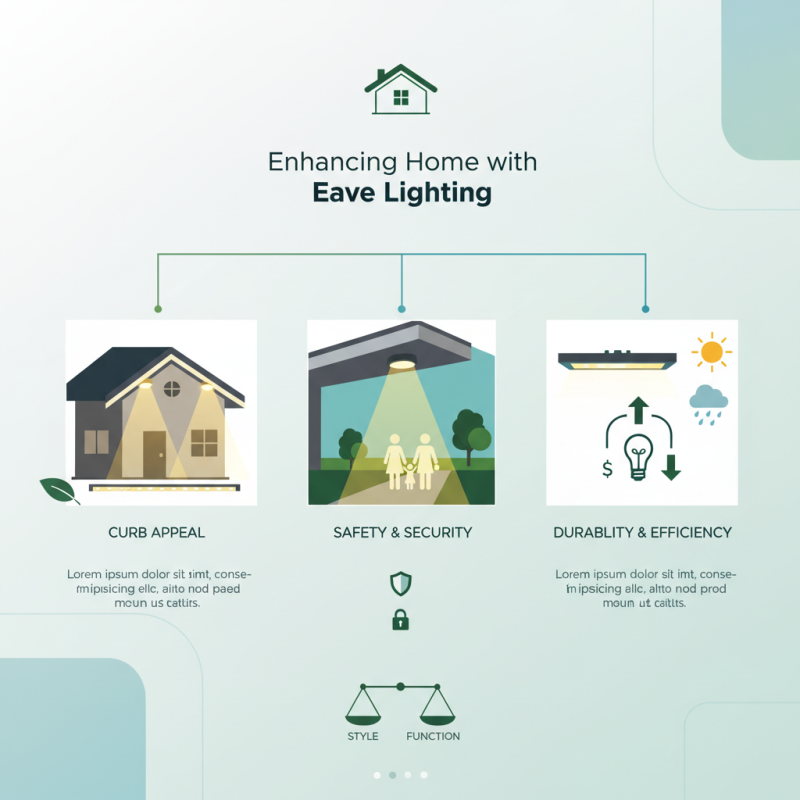
Eave lighting significantly enhances the exterior appeal of your home. It serves both functional and aesthetic purposes. Proper eave lighting illuminates entrances and pathways. It also creates a welcoming atmosphere. According to industry reports, 70% of homeowners feel safer with good exterior lighting. This is a key factor to consider when selecting eave lights.
When exploring types of eave lighting, consider recessed lights, sconces, and floodlights. Each type has its benefits and drawbacks. Recessed lights provide a sleek look but can be tricky to install. Sconces add charm but may not offer enough brightness. Floodlights, while bright, can be overpowering if placed incorrectly. A survey found that 45% of homeowners regret not considering light placement before installation.
Choosing eave lighting involves more than aesthetics. Reflect on your home’s layout and surrounding environment. Over-lighting can create harsh shadows and discomfort. Conversely, too little light can lead to safety issues. It's essential to strike a balance. Many homes fall short in leveraging the full potential of eave lighting due to poor planning. Aim for a harmonious blend of style and security while illuminating your home.
When assessing your home's exterior for the best eave lighting, consider several key factors. The architectural style of your home plays a significant role. For example, modern homes might benefit from sleek, minimalistic fixtures, while traditional homes may require something more ornate. According to the American Lighting Association, the right light can enhance your home's curb appeal by up to 30%.
Additionally, take note of the space surrounding your home. Think about landscaping, pathways, and entry points. Lighting should provide safety and highlight features without being overwhelming. In fact, a study by the National Association of Home Builders found that well-lit homes can significantly deter crime.
Tips: Choose fixtures with a weather-resistant rating. This ensures longevity against the elements. Also, consider LED options for energy efficiency. They can last up to 25,000 hours. Experiment with different placements; some may not provide the desired effect and require a reevaluation. It’s essential to find a balance that complements your home while serving functional purposes.
Eave lighting can transform your home's exterior. Choosing the right light fixtures involves balancing style and functionality. The design of your eave lighting should complement your home's architecture. Elegant fixtures add character, while modern, minimalist styles can create a sleek look.
According to the American Lighting Association, nearly 70% of homeowners prefer energy-efficient LED lights for outdoor spaces. These fixtures last longer, saving both energy and money. However, installation can be tricky. Ensure you hire a qualified electrician to handle the wiring. It might feel costly up front, but it prevents future issues.
Tips: Consider the brightness levels you need. Too bright can be harsh, while too dim can be unsafe. Think about the color temperature as well. Warm white lights create a cozy atmosphere, while cool white offers a more modern feel. Play around with different styles before making a purchase. Test a few options; get a friend’s opinion on what works best for your home.
When selecting eave lighting, energy efficiency and lifespan are crucial factors. Sustainable options can save money in the long run. LED lights are a popular choice. They consume less energy and last longer than traditional bulbs. A good LED can last over 25,000 hours. This is a significant benefit for homeowners.
Tips: Consider the brightness of the lights. Measure the width of your eaves to choose the right fixture size. Ensure you have enough light covering the area. Sometimes, what looks perfect in the store doesn’t fit your home.
Solar-powered lights are another great option. They harness the sun during the day. These lights are easy to install. However, they might not shine as brightly on cloudy days. It’s important to assess how much sunlight your eaves receive.
Choosing the right eave lighting requires careful thought. Think about your needs first. Do you prefer a soft glow or bright illumination? These choices can affect the overall appeal of your home. Sometimes, a mistake in lighting choice can dull the exterior. Make sure to visualize the final look before buying.
| Light Type | Wattage | Lifespan (Hours) | Energy Efficiency Rating | Average Cost ($) |
|---|---|---|---|---|
| LED | 10-15W | 25,000+ | A+ | 15-25 |
| CFL | 13-20W | 10,000 | A | 10-20 |
| Halogen | 20-40W | 2,000 | B | 5-10 |
| Incandescent | 40-100W | 1,000 | D | 1-2 |
Eave lighting can enhance your home's appearance. Installing it correctly is essential for both functionality and aesthetics. Here are some tips to consider.
Before installation, choose the right fixtures. Look for options that complement your home's style. Ensure they are suitable for outdoor conditions. Waterproof and weather-resistant fixtures can prevent damage.
When installing, take your time. Measure the distance between lights for even coverage. Avoid placing the lights too close together. This can create harsh shadows. Test the lights before finalizing their positions.
Maintenance is also key. Regularly check for any burnt-out bulbs. Clean the fixtures to remove dirt and dust. This simple step can improve brightness. Sometimes, lights may need repositioning due to changing landscape features. Adjust as needed to keep your home looking its best.
