
How to Choose China Best Dishwasher Tooling Manufacturers?

Choosing the right China Dishwasher Tooling manufacturer requires more than comparing prices or polished factory photos. It requires evidence.

A capable supplier should understand dishwasher panels, inner tubs, racks, injection-molded components, and the tooling stresses behind them. Ask for production samples, material certificates, dimensional reports, and mold-maintenance records. Examine the details. Are parting lines clean? Does the cooling layout reduce warping? Can the tool hold tight tolerances after thousands of cycles?

Manufacturing expert Dr. Steven R. Schmid offers a practical principle: “A good tool makes quality repeatable, not accidental.” This idea matters when evaluating Dishwasher Tooling partners. The manufacturer should explain steel selection, mold-flow analysis, surface treatment, cycle-time targets, and inspection procedures without hiding behind technical language.

Look for experience, not just capacity. A factory with CNC machining centers may still lack reliable project control. Ask how engineers handle design changes, trial-tool corrections, spare inserts, and delivery delays. Visit the workshop if possible. Watch how workers measure a finished cavity. Notice whether inspection equipment is calibrated and documented.

The cheapest quote can become expensive later. Rework, uneven cooling, flash, and delayed production can damage an entire launch. Still, no supplier is perfect. Even experienced teams make mistakes. The stronger manufacturer admits them early and records corrective actions.

A balanced decision should consider tooling accuracy, communication, after-sales support, traceability, and total lifecycle cost. China offers many capable manufacturers, but careful verification separates a dependable partner from a risky purchase.
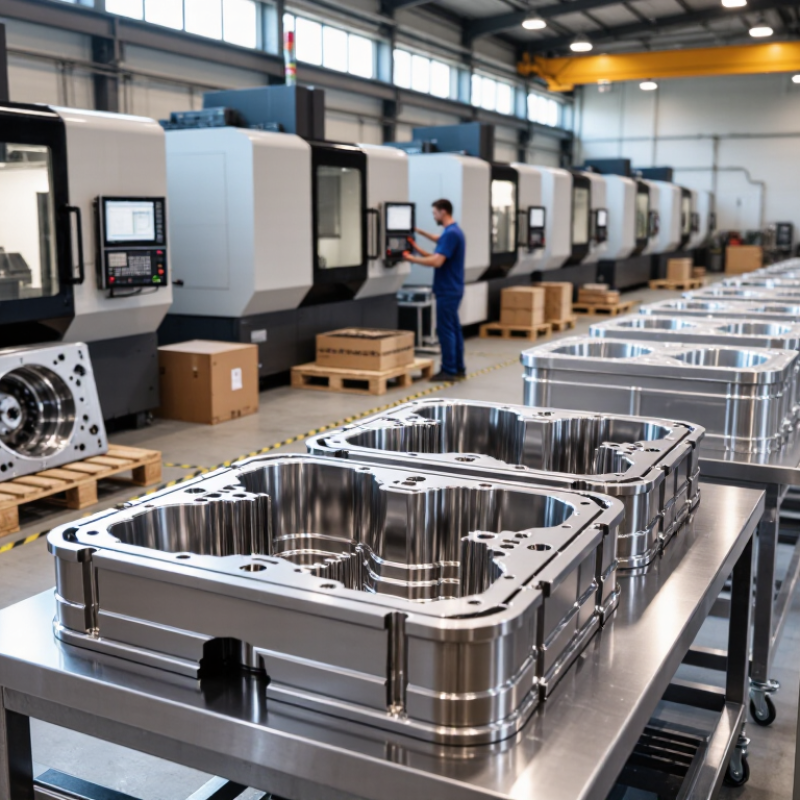
How to Choose China Best Dishwasher Tooling Manufacturers?

Define Your Dishwasher Tooling Requirements and Quality Standards

Choosing a dishwasher tooling manufacturer starts with a measurable product brief.

Define cavity dimensions, steel grade, wall thickness, draft angles, cycle time, and expected tool life. Specify whether the mold forms an inner tub, door panel, spray arm, or rack component. Each part faces heat, detergent, vibration, and repeated pressure.

The ENERGY STAR Residential Dishwashers Version 7.0 specification limits standard models to 3.2 gallons per cycle. That target increases pressure on hydraulic design and dimensional stability.

Your tooling partner should explain how cooling, venting, and warpage control support these demands. Ask for mold-flow analysis, material certificates, CMM reports, and trial-shot records. Do not accept “high precision” without stated tolerances.

Quality standards should match production risk, not only the quotation.

Require approved steel grades, hardness records, spare-insert plans, and traceable change control. ISO 9001:2015 offers a useful quality-management framework, but certification alone cannot prove tool performance.

Request a documented factory acceptance test with sample measurements, surface inspection, leak checks, and repeated opening tests. Three stable trial runs provide a practical starting point. Your validation plan may need more.

One mistake is checking only the first molded part. Heat cycling can later expose sink marks, burrs, and seal mismatch. I would add a production simulation using actual resin, cycle settings, and inspection gauges.

It costs more upfront. Yet the requirement may prevent an expensive mold revision.

Assess Manufacturer Expertise, Equipment, and Production Capacity

Choosing China’s best dishwasher tooling manufacturer requires more than comparing quotations. Assess engineering depth, equipment, and real production capacity.

Experienced suppliers should explain mold-flow analysis, stamping tolerances, cooling design, and surface-finish control. Ask for capability studies, inspection records, and trial-run samples. A reliable factory can show how it prevents warping around thin dishwasher panels and maintains consistent rack dimensions. The U.S. Department of Energy reports that modern dishwashers face strict water and energy requirements. Tooling must therefore support efficient spray structures, tight seals, and repeatable assembly. Small dimensional errors can increase leakage, noise, or rework.

Equipment reveals practical ability. Check whether the facility operates multi-axis machining centers, wire-cut machines, coordinate measuring machines, and controlled-temperature mold shops. The International Federation of Robotics reported 541,302 industrial robots were installed globally in 2023. Automation can improve consistency, but it does not replace skilled process engineers. Production capacity also needs evidence. Review machine utilization, shift schedules, backup equipment, and monthly tooling output. A large workshop may still have limited available capacity.

Tips: Request a live factory video or audit. Compare promised cycle times with maintenance records. Ask for one pilot tool before approving larger orders. Confirm steel certificates, inspection frequency, and corrective-action procedures. Do not trust capacity claims without production logs. I still leave room for doubt; even a strong supplier can underestimate complex revisions.

Verify Materials, Precision Control, and Quality Management Systems

Choosing China’s best dishwasher tooling manufacturer requires more than comparing quotations. Start with material verification. Ask for steel grade certificates, heat-treatment records, and traceability from billet to finished mold. For corrosion-prone tooling, review chromium content and hardness data, not only supplier claims. The World Steel Association reported global crude steel production above 1.8 billion tonnes in 2023, so material availability is broad. Consistent metallurgy is harder to secure.

Precision control should be visible on the shop floor. Request coordinate-measuring-machine reports, dimensional tolerances, surface-finish readings, and first-article inspection records. Critical cavities may need measurements within a few microns, depending on the tooling design. Thermal cycling can expose small errors. I have seen polished surfaces hide weak venting and uneven cooling. That mistake becomes expensive during production.

Quality management systems provide structure, but certificates need verification. The ISO Survey 2023 recorded more than 1.2 million ISO 9001 certificates worldwide. A certificate helps, yet it cannot prove every process. Check calibration intervals, nonconformance logs, corrective-action evidence, and change-control procedures. ASQ quality research has associated poor quality with costs reaching roughly 15–20% of sales in some organizations. Ask how the manufacturer tracks rework, scrap, and mold modifications. Real evidence matters more than impressive walls. Small gaps remain possible, so independent inspections and trial-run data deserve a place in the purchasing decision.

Compare Pricing, Lead Times, Communication, and After-Sales Support

Choosing a China dishwasher tooling manufacturer requires more than comparing the lowest quotation. Ask for a cost breakdown covering steel grade, machining, heat treatment, polishing, sampling, and packaging. A cheaper mold may hide extra correction charges. Deloitte’s 2023 Global Chief Procurement Officer Survey identifies cost management and supply disruption as major procurement concerns, making transparent pricing essential.

Lead time should be written as measurable milestones: design approval, steel arrival, rough machining, trial production, correction, and final acceptance. The World Bank’s 2023 Logistics Performance Index gives China a strong logistics score, but port delays and factory capacity can still affect delivery. Request weekly progress photos, inspection records, and a named technical contact. Communication quality is often more valuable than a fast promise. Keep that in mind.

Tips: Compare total cost, not unit price. Ask how many mold trials are included. Confirm response times for design questions and urgent defects. After-sales support should specify correction periods, spare components, remote troubleshooting, and on-site service fees. ISO 9001-based procedures can support traceability, but certification alone proves little. Review recent inspection samples and acceptance standards. A practical test is to send one complex drawing and judge the supplier’s questions. Poor questions reveal future problems. Some buyers overlook this step, including experienced teams. Be cautious.

Evaluate Samples, Factory Credentials, and Long-Term Partnership Potential

Choosing a Chinese dishwasher tooling manufacturer requires evidence beyond polished photos. Request a production sample, dimensional report, and mold-maintenance record. Test the sample during assembly, not only on a workbench. Check door alignment, spray-arm clearance, sealing surfaces, and repeated-cycle wear. A perfect first sample proves little.

Verify the factory’s registration, workshop address, equipment list, and quality-control responsibilities. Ask for the ISO 9001 certificate scope and issuing body.

The ISO Survey 2023 recorded more than 1.2 million ISO 9001 certificates worldwide. Therefore, certification alone is not a differentiator. Stronger evidence includes CMM calibration, steel traceability, inspection records, and corrective-action history. Ask for failed parts, too.

Long-term partnership potential depends on response discipline. Agree on revision control, trial schedules, spare inserts, maintenance intervals, and tooling-data ownership.

The International Energy Agency’s Energy Efficiency 2024 report links efficiency gains with better-performing equipment and systems. Stable tooling supports accurate fit, sealing, and leakage control.

Grand View Research’s 2024 dishwasher market analysis forecasts annual growth above 6% through 2030, increasing pressure on speed and consistency. Treat forecasts carefully. They are not purchase orders.

Use a paid pilot with milestone acceptance, transparent change costs, and quarterly process reviews. The cheapest quote may become expensive.

dLED: retail LED lighting
Privacy Overview

This website uses cookies so that we can provide you with the best user experience possible. Cookie information is stored in your browser and performs functions such as recognising you when you return to our website and helping our team to understand which sections of the website you find most interesting and useful.